Author: Voxpense-Team

  • Never Miss a Bill Payment Again: Best Bill Reminder App Guide

    Never Miss a Bill Payment Again: Best Bill Reminder App Guide

    The Silent Financial Crisis Nobody Talks About

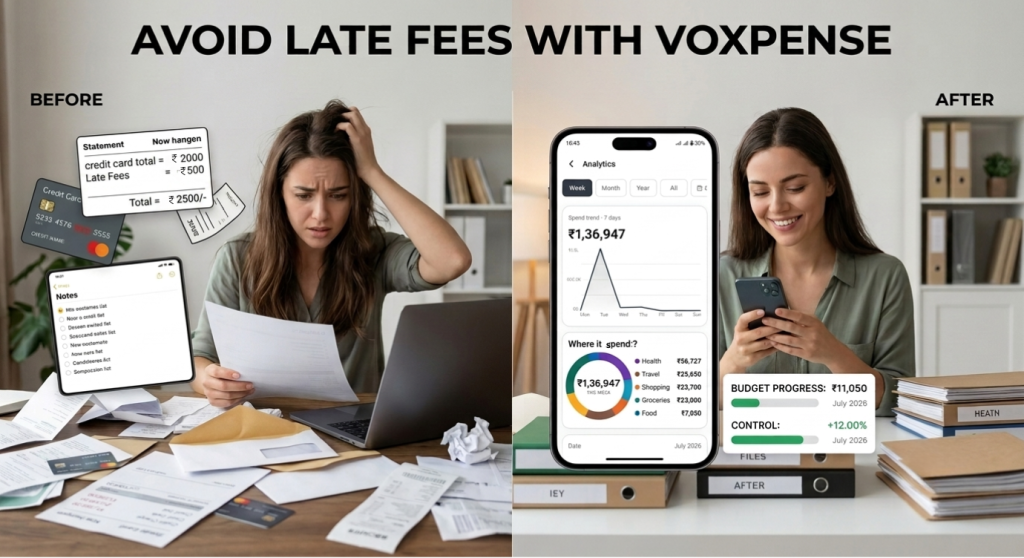
    You receive a notification on your phone three weeks after your electricity bill was due. Your heart sinks. Not only do you owe the original amount, but you’re now staring at a late fee—often 1-5% of your total bill plus potential penalties. What started as a simple oversight has just cost you money you didn’t plan to spend.

    This scenario plays out millions of times monthly across households and businesses worldwide. According to recent financial data, Americans collectively pay over $1.5 billion in unnecessary late fees annually, often on bills as small as $10 subscriptions or $50 utilities. But the real cost goes far beyond the monetary amount—late fees trigger a cascade of financial and psychological consequences that ripple through your entire financial life.

    The True Cost of a Missed Bill Payment:
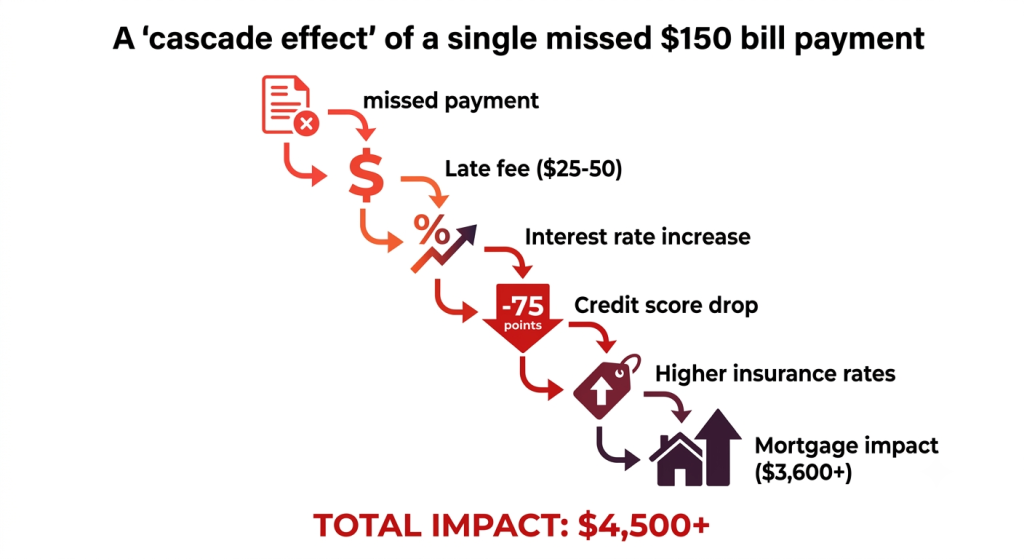
    Missing a bill payment costs more than just a late fee.

    Immediate Financial Impact:

    • Late fees typically range from 1-5% of your bill amount, but can exceed 10% on certain accounts
    • Interest begins accruing on unpaid balances at rates that can jump 5-10% above your regular rate
    • A single missed utility payment can result in reconnection fees ($50-$300) if service is disconnected
    • Subscription services often charge recurring late fees that compound with each missed payment

    Credit Score Consequences:

    Your credit score is built on five pillars, and payment history represents 35% of your total score—the single largest factor. Missing even one payment by 30 days can:

    • Drop your credit score by 50-100 points immediately
    • Remain on your credit report for up to 7 years
    • Increase interest rates on future loans and credit cards by 1-3%
    • Cost you tens of thousands in higher mortgage interest alone

    Research from FICO shows that a single 30-day late payment can reduce a 750-credit score to approximately 690—a devastating drop that takes years to recover from.

    Psychological Toll:

    Financial stress from missed payments is a leading cause of anxiety and sleep disruption. The American Psychological Association reports that money is the top stress factor for 64% of adults, and unpaid bills contribute significantly to this anxiety. Missing bill payments creates:

    • Constant background stress about financial obligations
    • Fear of service disconnections or collection agencies
    • Shame and embarrassment about financial management
    • Relationship strain when shared finances are affected
    • Reduced productivity and focus in work and personal life


    Long-Term Consequences:

    A single missed payment can affect your financial life for years:

    • Higher insurance premiums (insurance companies check credit scores)
    • Difficulty securing housing (landlords run credit checks)
    • Challenges obtaining employment (many employers review financial responsibility)
    • Barriers to getting approved for credit when needed
    • Limited negotiating power with service providers

    Why We Miss Payments (And Why It’s Not Your Fault)

    Before we dive into solutions, let’s acknowledge the reality: missing bill payments isn’t primarily a character flaw—it’s a system design problem.

    The Modern Bill Payment Chaos

    Today’s average household manages 15-20 different bills across multiple providers, platforms, and payment due dates. Here’s the complexity:

    Due Dates Are Everywhere:

    • Utility bills might be due on the 5th
    • Credit card payments on the 15th
    • Subscription services on various assigned dates
    • Loan payments potentially on different dates
    • Insurance premiums spread across the month

    This fragmentation means you need to track payment dates across 15-20 different locations, platforms, and systems. A typical person works 40+ hours weekly, manages family obligations, and handles countless other responsibilities. In this context, a missed bill payment isn’t stupidity—it’s mathematics. You can’t realistically remember 20 different dates across 20 different platforms.

    The Smartphone Paradox: While smartphones have made communication easier, they’ve also made managing everyday life more complex. You’re receiving notifications constantly—messages, social media, work emails, news alerts. Bill due date reminders, buried in email or lost among thousands of notifications, simply don’t stand out.

    Studies show that the average person receives around 63.5 notifications every day. As a result, your bill payment reminder can easily get lost in the constant stream of alerts, becoming just another notification your brain has learned to ignore.

    The Hidden Banking Architecture: Many financial institutions still operate on outdated systems where bills arrive via mail weeks before they’re due, then sit in your inbox until the last moment. Credit cards, mortgages, and utilities often have different online platforms, different login credentials, and different interfaces—adding friction to every payment.

    The Solution: Voxpense – Smart Bill Reminder App

    A Voxpense bill reminder app is fundamentally different from just using your phone’s basic calendar. The best bill reminder applications combine several critical features that work together to ensure you never miss a payment:

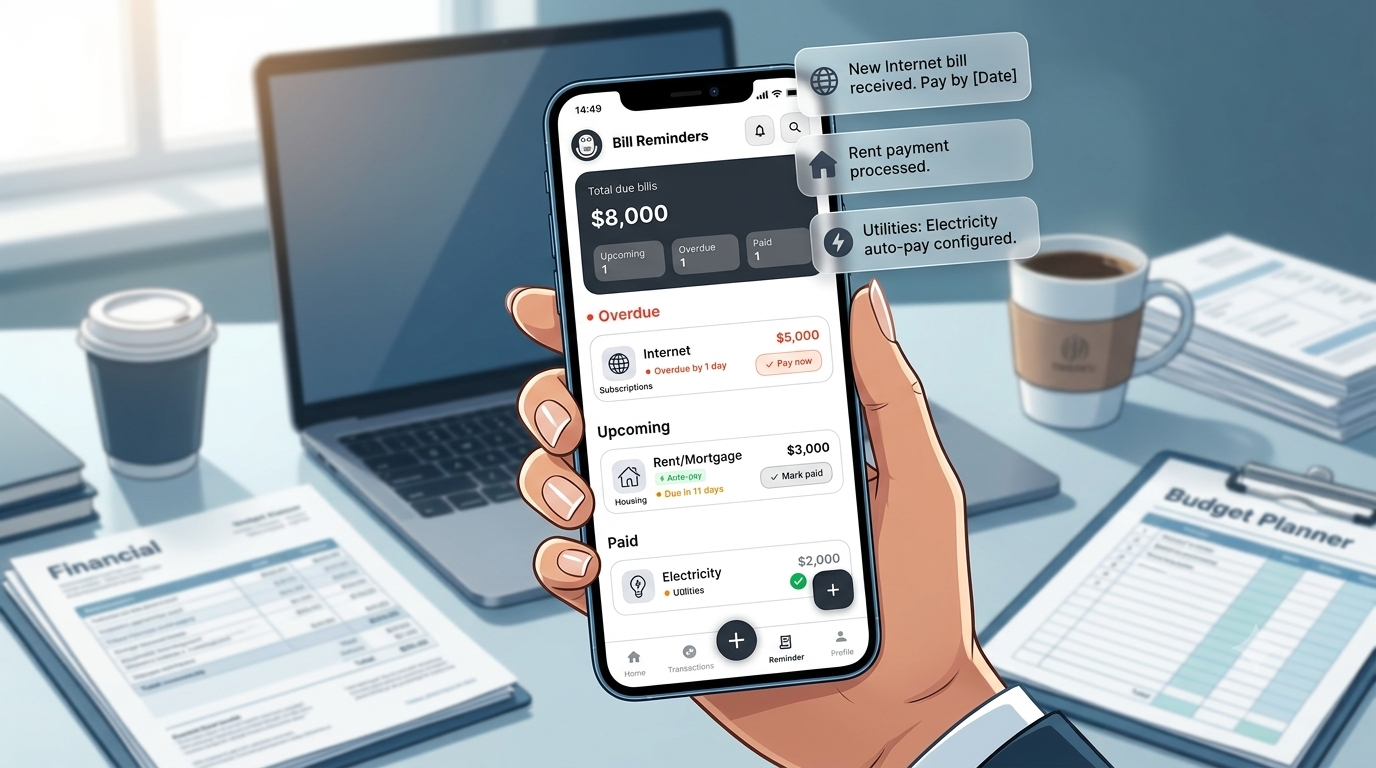
    1. Centralized Bill Dashboard

    A smart bill organizer consolidates all your bills into one unified view. Instead of logging into 15 different platforms, manage everything in one place:

    • All upcoming bills at a glance
    • Due dates clearly displayed
    • Amount owed for each bill
    • Payment status and history
    • Time remaining before each payment

    This single-pane-of-glass approach eliminates the fragmentation that causes missed payments in the first place.

    2. Proactive Notifications

    Unlike passive reminders, smart bill reminder apps use intelligent notification systems that:

    • Alert you multiple times before due dates (e.g., 1 week before, 3 days before, 1 day before)
    • Prioritize high-risk bills (large amounts, critical services)
    • Send notifications through multiple channels (push notifications, SMS, email)
    • Escalate reminders if you don’t mark them as “paid”
    • Work even if you disable notifications for other apps

    The key difference: these aren’t just calendar alerts you’ve learned to ignore. They’re persistent reminders designed specifically for preventing payment failures.

    3. Bill Tracking Across Accounts

    The best bill organizer apps can:

    • Categorize bills by type (utilities, subscriptions, loans, insurance, etc.)
    • Track spending patterns across all bills
    • Show you how much you spend monthly on each category
    • Identify bills you might have forgotten about or no longer use
    • Alert you to billing changes or unexpected increases

    4. Payment Integration

    Advanced bill reminder apps reduce friction by allowing you to:

    • Pay your bills directly from the app whenever possible.
      Store secure payment information
    • Set up automatic payments for recurring bills
    • See payment history and receipts in one place
    • Get immediate confirmation of payment processing

    5. Financial Insights

    The best bill payment apps provide:

    • Monthly spending overview
    • Budget recommendations based on your bill patterns
    • In-app alerts become more prominent if earlier reminders go unacknowledged.
    • Analysis of which bills are consuming the most of your income
    • Seasonal spending patterns (higher heating costs in winter, etc.)

    Why Voxpense is the Ultimate Bill Reminder App

    Voxpense was built from the ground up to solve the specific problems that cause missed bill payments. Here’s how it stands apart:

    Multi-Channel Notification System

    You won’t miss a Voxpense reminder because:

    • Smart timing delivers reminders when you’re most likely to take action—not at 3 AM.
    • Push notifications are designed to grab your attention when a bill payment is due.
    • In-app alerts become more prominent if earlier reminders go unacknowledged.

    Automated Bill Discovery

    Voxpense reduces manual data entry by:

    • Automatically detecting recurring charges
    • Identifying bills you might have forgotten about

    Smart Bill Organizer Features

    Voxpense organizes your bills intelligently:

    • Automatically categorizes bills (utilities, subscriptions, loans, insurance, healthcare, entertainment)
    • Tracks upcoming large payments so you can plan your budget in advance.

    Payment Flexibility

    Voxpense works with how you actually want to pay:

    • Supports one-time and recurring bill entries
    • Lets you schedule payments in advance to avoid missed deadlines

    Credit Score Protection

    Because Voxpense prevents missed payments, it:

    • Keeps your payment history perfect (the biggest factor in credit scores)
    • Helps you avoid late fees that compound financial stress
    • Gives you time to budget for large upcoming bills
    • Prevents the cascade of consequences that follow a single missed payment
    • Maintains financial stability for your family

    The Financial Math: What You’ll Save with a Bill Reminder App

    Let’s put real numbers to this. Consider an average household with:

    • 3 utility bills
    • 2 credit cards
    • 1 mortgage/rent payment
    • 2 insurance payments
    • 4 subscription services
    • 2 loan payments

    In fact, that’s 14 bills to track every month. Without a reliable bill reminder app, studies suggest the average household misses at least one payment every 2–3 years. As a result, here’s what that can cost:

    Single Missed Payment Scenario:

    • Late fee (average 2% of bill): $15-$50
    • Interest increase (1-3% on future balances): $50-$200 annually
    • Credit score impact (average 50-point drop): $3,600 more interest on a $200,000 mortgage over 30 years
    • Insurance rate increase (0.5-2% higher premiums): $100-$500 annually
    • Total cost: $3,765-$4,750 from one missed payment

    Over a decade, even if you miss just two payments (a statistically conservative estimate), the financial costs can add up significantly.

    • Direct costs: $7,530-$9,500
    • Lost opportunity costs: $15,000-$25,000
    • Relationship stress, anxiety costs: Priceless

    A premium bill reminder app typically costs $0-$5 monthly. Over 10 years, preventing just 2 missed payments pays for itself 300+ times over.

    How to Never Miss a Bill Payment Again: A Step-by-Step System

    Using a bill reminder app is only part of the solution. Here’s a complete system for payment perfection:

    1: Consolidate Your Bills

    1. Gather all billing statements (check email, mailbox, online accounts)
    2. Create a master list of:
      • All bills you pay
      • Exact due dates
      • Amount owed
      • How you typically pay
      • Account login information (stored securely)

    2: Set Up Your Bill Reminder App

    1. Choose a reputable bill reminder app (like Voxpense)
    2. Enter all bill due dates into the app
    3. Set your notification preferences:
      • 1 week before due date
      • 3 days before due date
      • 1 day before due date
    4. Enable notification channels like push notifications.

    3: Establish Payment Rhythms

    1. Instead, choose specific days each week or month to review your bills.
    2. Dedicate 15 minutes to addressing notifications
    3. Set up automatic payments for bills that support them
    4. For bills that can’t be automated, pay them as soon as you’re notified.

    4: Eliminate Subscription Waste

    Use your bill organizer to:

    1. Note renewal dates for services you keep
    2. Set reminders for annual subscription reviews

    5: Create Accountability

    1. Share bill payment responsibilities with a partner if applicable
    2. Review bill organizer app weekly
    3. Discuss any unusual charges or increases
    4. Celebrate payment perfection (seriously—it reduces stress)

    The Psychology of Prevention vs. Cure

    According to behavioral economics, “present bias” causes us to prioritize avoiding immediate discomfort over preventing future problems. Consequently, a missed bill payment may seem like a minor, one-time mistake. However, the financial consequences often compound over months and years, turning a small oversight into a much higher cost.

    A bill reminder app changes this equation by:

    • Making consequences visible in advance (showing due dates)
    • Creating immediate action opportunities (notifications)
    • Removing the mental friction of remembering
    • Reducing stress about forgotten bills
    • Building confidence in financial management

    People who use bill reminder apps consistently report:

    • Reduced financial anxiety (the biggest benefit)
    • Better sleep quality
    • Improved credit scores (average 40-60 point improvement in first year)
    • Less relationship conflict about finances
    • Greater overall life satisfaction

    Preventing Late Fees: A Cultural Shift

    Individually, preventing missed bill payments is a smart financial move. Collectively, adopting bill reminder apps represents a shift toward more intentional financial management.

    Financial stress is epidemic. The American Psychological Association reports that 64% of adults cite money as their primary stress source. Much of this stress is preventable through better tools and systems.

    Making the Commitment to Payment Perfection

    Here’s what we know:

    • You’re going to have bills. This is non-negotiable in modern life.
    • You’re going to be busy. Everyone is.
    • Your brain isn’t optimized to remember 20 different due dates across 20 different platforms.
    • The consequences of a single missed payment are severe and lasting.
    • A bill reminder app is inexpensive, effective, and widely available.

    The only question is: will you use the tools available to you, or will you continue relying on memory and luck?

    The answer matters. It matters for your credit score. It matters for your financial health.

    Ready to Take Control of Your Finances?

    Start your Voxpense free trial today.

    Join thousands of people who’ve eliminated bill payment anxiety and improved their financial health. Voxpense’s bill reminder app combines intelligent notifications, automated bill tracking, and financial insights into one simple platform.

    Get started in 60 seconds:

    1. Download Voxpense
    2. Add your bills
    3. Receive proactive reminders
    4. Pay on time, every time

    Your perfect payment history is waiting. Start Your Free Trial Today.

    Take action today. Your future self will thank you.

  • Voxpense – Single-Handed Expense Manager for Busy Lives

    Voxpense – Single-Handed Expense Manager for Busy Lives

    The $47 Latte You Don’t Remember Buying

    You pull up your credit card statement on Monday evening. There it is: Starbucks, $6.80. Again. But you can’t remember which day you bought it.

    Then another one: $6.45. And another: $7.20.

    Three lattes from last week alone: twenty dollars you didn’t consciously spend. And that’s just coffee.

    Scroll down further: parking meters ($5), lunch from that food truck ($12), gas station snacks ($8), rideshare services ($23), delivery app fees ($6), a quick pharmacy run ($15).

    By Friday, you’ve spent $121 on small purchases you barely remember making. At the end of the month, that’s nearly $500 in “forgotten” micro-transactions.

    But here’s the real problem: You didn’t budget for any of it. Your financial plan assumed you’d spend $80 on dining out. You actually spent $200. Your budget for transportation was $120. You spent $185.

    These small, frequent expenses aren’t individually significant. But collectively, they’re sabotaging your budget and destroying your financial plan.

    And the worst part? You can’t even remember where the money went.

    Financial experts call this the “invisible money leak.” Micro-transactions—small purchases under $20 are the ones most frequently forgotten because of a simple principle: if it doesn’t feel like a purchase, you don’t mentally budget for it.

    The Forgotten Economy: Why Micro-Transactions Are Invisible

    Your brain evolved to remember big, intentional purchases. When you buy a laptop for $1,200, you consciously decide to do it. It’s a purchase. It gets filed away in your memory as “that time I bought a computer.”

    But a $6 coffee? Your brain doesn’t register it the same way. You’re focused on the meeting ahead, the email you need to send, getting the kids to school on time. The coffee is incidental, a vehicle for caffeine, not a transaction worth remembering.

    Why Micro-Transactions Are Getting Worse

    The last decade has transformed how we spend money. Our daily lives have shifted from occasional spending to frequent, recurring expenses, from coffee runs and rideshares to managing multiple subscriptions every month.

    The frequency has increased exponentially. And with each increase in frequency comes a decrease in conscious awareness.

    Research from the Journal of Consumer Psychology shows that:

    • 90% of people accurately remember large purchases ($100+)
    • 60% of people accurately remember medium purchases ($20-100)
    • Only 15% of people accurately remember micro-transactions (under $20)

    This isn’t laziness or lack of discipline. It’s a limitation of human working memory combined with modern spending patterns designed to be frictionless. Every company optimizing their payment process to be as easy as possible has made it easier for you to spend money without thinking about it.

    You can now:

    • Tap your phone once for coffee
    • Say “Alexa, order that product”
    • Subscribe to services with a single click
    • Use one-touch payment buttons
    • Auto-pay recurring charges

    Each optimization makes spending easier and less cognitively taxing. The result: you spend more money on things you barely notice spending money on.

    Busy People Need Better Than Traditional Expense Trackers

    You know you should track your spending. You’ve probably tried.

    Most people have tried at least three different expense tracking methods:

    1) The Phone Notes App Approach!

    You decide to jot down every expense in your notes app. “Great system!” you think on day 1. By day 5, you’re at a coffee shop and remember you should write down last week’s expenses. You scribble seven purchases down that you can’t quite remember. By day 15, you’ve given up because this requires you to stop what you’re doing, pull out your phone, open the app, remember what that $15 charge was for, type it in, categorize it, and continue your day.

    That friction that cognitive and physical burden is unsustainable when you’re already juggling 47 other things.

    2) The Receipt Collection Approach!

    You’ll collect all your receipts and input them on Sunday! You probably make it one Sunday before you realize:

    • Half your receipts are missing (they’re tiny)
    • You have 40 receipts to input by hand
    • Inputting 40 receipts takes 45-60 minutes
    • Your Sunday got consumed by data entry
    • The next Sunday, you skip it because you’re tired

    3) The Credit Card Statement Approach!

    You’ll just look at your credit card statement at month-end and see where the money went. But this is pure reaction. By then:

    • You can’t change the behavior (money already spent)
    • You can’t remember the context (what was that $47 charge for?)
    • You can’t do any real budgeting (too late to adjust)
    • You can’t create better habits (disconnected from actual spending)

    The Spreadsheet Approach:

    Excel! Google Sheets! The most organized system! You create a beautiful spreadsheet with categories, color coding, and formulas. Then:

    • Pulling out your laptop to log a $6 coffee is worse than noting it.
    • Sync issues between devices create duplicates and confusion.
    • Manual entry errors happen constantly.
    • One wrong number throws off your whole system.
    • The cognitive burden increases as the spreadsheet gets bigger.

    Why All These Fail:

    Every traditional expense tracking method assumes you have time to stop what you’re doing to log an expense.

    But you don’t. You’re:

    • Driving to work
    • In the middle of a client call
    • Picking up kids from school
    • Between meetings
    • Handling a crisis at work
    • Dealing with an emergency

    In that moment while you’re actually spending money, the last thing you want to do is pull out a device, navigate an app, and manually input data.

    The solution most “busy people” choose? Don’t track it. Just hope you can remember or estimate it at month-end.

    The Voxpense – (Single-Handed Expense Manager): A Better Solution

    Logging an expense shouldn’t interrupt your day. It should happen while you’re commuting, between meetings, or even when your hands are full. Instead of manually typing every detail, your expenses could be categorized automatically. Better yet, the entire process could take just 2–5 seconds instead of 30–60 seconds.

    That’s the entire concept of a Voxpense – an app designed for the reality of busy people’s lives.

    The Problem With Traditional Apps

    Traditional budgeting apps were designed for a different era. They assume:

    • You have time to sit down and log expenses
    • You’ll remember details about past purchases
    • You want to manually type information
    • You prefer precise categories you’ve set up
    • You’re using a device with two hands

    But modern life doesn’t work that way.

    A proper fast expense tracker needs to:

    1. Require Minimal Interaction: Not clicking through 3 screens. Not selecting from 20 categories. Not typing detailed notes. Just: open, log, close. Ideally 2-5 seconds max.

    2. Work One-Handed: You’re holding a coffee, steering a car, carrying groceries, or rocking a baby. The app needs to work when you have only one free hand.

    3. Accept Voice Input: The fastest way to input data when your hands are busy is with your voice. “Coffee, 6.50, Starbucks” should log the transaction in real-time.

    4. Learn Your Patterns:
    The app should remember:

    • Where you usually spend money (Starbucks, not “coffee shop #47”)
    • How much you usually spend
    • What category it belongs to
    • Common merchants and amounts

    5. Categorize Automatically: If you say “Starbucks 6.50,” it should know:

    • Merchant: Starbucks
    • Category: Dining/Beverages
    • Amount: $6.50
    • Date/time: No manual selection required.

    6. Sync Across Devices: You should be able to log an expense on your phone. Everything syncs to give you a real-time view of spending.

    What A Voxpense – Expense Manager Actually Does

    A proper on-the-go budget app changes the experience completely:

    Before (Traditional App):

    Purchase coffee at Starbucks
    ↓
    Remember to log it (maybe)
    ↓
    Stop what you’re doing
    ↓
    Pull out phone
    ↓
    Open app
    ↓
    Tap “Add Expense”
    ↓
    Type “Starbucks” (spell it out)
    ↓
    Select from categories: Food? Dining? Beverages?
    ↓
    Enter $6.80
    ↓
    Add note? (optional, usually skip)
    ↓
    Confirm and save
    ↓
    Close app
    ↓
    Resume what you were doing

    TIME: 45-60 seconds
    FRICTION: Very high
    HABIT FORMATION: Low (you’ll skip most transactions)

    After (With Voxpense Expense Manager):

    Purchase coffee at Starbucks
    ↓
    While walking/driving/busy: ” Spend 6.50 on Starbucks coffee “
    ↓
    App logs it instantly
    ↓
    Continues learning your spending
    ↓
    Resume what you were doing

    TIME: 2-5 seconds
    FRICTION: Virtually none
    HABIT FORMATION: High (you’ll log almost everything)

    How Voxpense – Voice-Activated Expense Tracking Changes Everything

    The Science of Frictionless Habits

    Behavioral psychologist B.J. Fogg has researched habit formation for 20 years. His core finding: tiny behaviors are more likely to become habits than ambitious behaviors.

    He discovered a principle called “Habit = Motivation × Ability × Prompt”

    For expense tracking:

    • Motivation: You want to understand your spending (moderate)
    • Ability: Traditional app has high friction (low ability)
    • Prompt: Spending naturally prompts tracking (high)

    Low ability × existing prompt = Low habit formation rate

    But with a Voxpense – expense manager:

    • Motivation: Still moderate
    • Ability: Incredibly easy, no friction (high ability)
    • Prompt: Spending naturally prompts tracking (high)

    High ability × existing prompt = High habit formation rate!

    This is why voice-activated tracking works for busy people: it removes the friction that prevents habit formation.

    The Real-Time Budget Visibility Advantage:

    When you track expenses as they happen (not at month-end):

    You see patterns immediately. After a week, you might realize: “Wait, I’ve spent $40 on coffee already? That’s more than I thought.”

    This immediate feedback triggers behavioral change faster than any month-end analysis.

    You can make real-time adjustments. Instead of discovering you’ve overspent on dining at month-end (when it’s too late), you see it by Wednesday and adjust your behavior for the rest of the week.

    You build better financial intuition. When you’re constantly logging small expenses, you develop a more accurate sense of “what things cost” and “how much I actually spend.”

    You can catch fraud immediately. See an expense you didn’t make? Flag it instantly instead of discovering it on your statement weeks later.

    You maintain budget discipline. When you’re seeing your spending in real-time, it’s much harder to rationalize overspending in any category.

    The Hidden Problem With Micro-Transactions: The Behavioral Drift

    There’s something else happening with forgotten micro-transactions that’s even more insidious than the financial cost.

    Spending creates momentum.

    Once you’ve bought one expensive coffee, the mental resistance to buying another drops. “I already spent $7 today, so another $7 isn’t that much worse.”

    This is called decision fatigue threshold displacement. After you make one purchasing decision in a category, your willpower for that category decreases with each additional decision.

    Here’s a smoother version with transition words for better readability:

    Psychologists call it the “what-the-hell effect”: “I’ve already broken my budget, so what the hell, I might as well eat out tonight too.”

    As a result, if you can’t see your spending accumulating, this effect becomes even stronger. For example, you might spend $40 on coffee by Friday without realizing it because each individual purchase feels too small to notice. Over time, those seemingly insignificant expenses quietly add up, making it easier to overspend without realizing it.

    But when you’re tracking in real-time:

    • After the first coffee, you see: $6.50 logged
    • After the second, you see: $13 total
    • After the third, you see: $19.50 total
    • By the fourth, you see: $25.50 and think “Wait, that’s way too much”

    As a result, the visible accumulation triggers behavioral correction before it becomes a pattern.

    Voxpense: The Ultimate Single-Handed Expense Manager

    To solve this problem, Voxpense was specifically designed for the modern busy person. It solves every problem that makes traditional expense tracking fail.

    Key Features of Voxpense Tracking:

    1. Voice-Activated Logging – Simply say:

    • “Spend 6.50 on Coffee “
    • “Paid 5 for parking”
    • “Spend 12.95 on lunch, Chipotle”

    The app understands conversational input and logs it instantly. No typing required.

    2. Merchant Recognition: Voxpense learns the merchants you frequent:

    • “Starbucks 6.50” → Automatically categorized as “Dining: Beverages”
    • “Chevron 45” → Automatically categorized as “Transportation: Gas”
    • “Uber 23” → Automatically categorized as “Transportation: Rideshare”

    After a few uses, you can just say “Starbucks 6,” and the app fills in the category and merchant details.

    3. Smart Categorization: You define your budget categories (or use defaults), then Voxpense learns:

    • What falls into each category
    • Your spending patterns by category
    • Which merchants belong where
    • Common amounts and frequencies

    4. Real-Time Budget Dashboard: See at a glance:

    • Total spent this month
    • By category breakdown
    • In comparison to your budget
    • How much you have left to spend
    • Trends and patterns

    5. Multi-Device Support: Log expenses from:

    • Your phone (easiest for most transactions)
    • Voice assistants (Alexa, Google Assistant integration)

    6. Insights and Analytics: Instead of just tracking expenses, Voxpense provides actionable insights to help you make smarter financial decisions.

    • Spending trends over time
    • Category analysis (where’s most of your money going?)
    • Merchant analysis (which stores do you visit most?)
    • Behavioral insights (“You’ve increased dining 23% this month”)
    • Forecasting (at current rate, you’ll spend X this month)

    How Voxpense Fits Into Your Busy Lifestyle

    For Busy Professionals

    You’re constantly in meetings, between calls, managing multiple projects.

    Traditional expense tracking asks: “Do you have 30-60 minutes to input expenses?”

    Rather than interrupting your day, Voxpense asks: “Can you say five words while walking between meetings?”

    Scenario:

    • 9:15 AM: “Spend 6.50 on Coffee, Starbucks”
    • 12:45 PM: “Paid for Lunch, 14.20, Panda Express”
    • 6:30 PM: “Uber, 18, ride home”

    Total time: 20 seconds across the entire day. Traditional app time: 3-5 minutes. Difference: You actually track 90% vs. remembering 40%

    For Busy Parents

    You’re managing kids’ schedules, activities, meals, emergencies.

    Voxpense works one-handed while you’re holding a toddler, steering a car, or cooking dinner.

    Scenario:

    • “Starbucks, 5.50” (while at school pickup)
    • “Gas, 48” (while filling up, kids in car)
    • “Grocery, 73” (while pushing cart)

    Traditional app requires: Two hands, attention, 3-5 minutes. Voxpense requires: One hand, 5 seconds per transaction.

    For Gig Workers

    You’re constantly paid different amounts, at different times, for different work. You need to track expenses against income in real time.

    You’re constantly paid different amounts, at different times, for different work. You need to track expenses against income in real-time.

    Voxpense’s merchant and category learning adapts to your unique spending patterns:

    • Tool/equipment expenses
    • Work-related meals
    • Professional services
    • Travel costs

    Real-time tracking means you can see the expense as it happens, not at tax time.

    How to Choose the Right On-The-Go Budget App

    If you’re serious about tracking micro-transactions while staying busy, look for these features:

    1. Voice Input Capability

    • Must support natural language
    • Should recognize common phrases
    • Should learn your preferences

    2. One-Handed Operation

    • Thumb-friendly interface
    • Large, easy-to-tap buttons
    • Minimal navigation layers

    3. Fast Expense Entry

    • Ideally <5 seconds per transaction
    • Minimal typing required
    • Smart category suggestions
    • Quick confirmation (don’t make them verify 5 times)

    4. Automatic Categorization

    • Learns your spending patterns
    • Recognizes merchants
    • Suggests categories
    • Allows quick customization

    5. Real-Time Visibility

    • Current month total always visible
    • Budget progress shown clearly
    • Category breakdowns quick to access
    • Trends immediately apparent

    6. Multi-Device Sync

    • Works across phone/web/tablet
    • Instant syncing
    • No duplicate entries

    7. Bank Integration

    • Connects to accounts

    8. Privacy & Security

    • No sharing of financial data
    • User controls what syncs
    • Clear privacy policy

    9. Customer Support

    • Available if you have issues
    • Responsive to bugs
    • Actively developing new features
    • Listens to user feedback

    The Cost of Not Tracking Micro-Transactions

    Let’s be honest: tracking feels optional. Your rent will get paid whether you track it or not.

    But let’s look at the actual cost:

    If you don’t track for 5 years:

    • Forgotten micro-transactions: $41,100
    • Increased credit card interest (due to poor budgeting): $4,200
    • Financial stress and anxiety impact: Incalculable
    • Missed investment opportunities (if that $500/month had been invested): $35,000+

    Total 5-year cost: $80,300+

    A single-handed expense manager costs $50-80/year or free.

    5-year return: 1000:1 ratio

    Preventing just one micro-transaction mistake (like overspending by $500/month) pays for the app for literally decades.

    The difference isn’t in cost. It’s in actual behavior change.

    The Psychology of “Forgetting” Spending

    Here’s something most people don’t realize: you’re not actually forgetting to log.

    You’re actively avoiding logging because the friction is too high.

    Your brain recognizes: “Logging this takes effort I don’t have.” So it deprioritizes the task.

    This isn’t a willpower problem. It’s a design problem.

    The solution isn’t to try harder. It’s to use better tools.

    A single-handed expense manager removes the design barrier, which removes the psychological resistance, which enables the habit.

    Making the Shift: From “Hoping to Remember” to “Actually Tracking”

    Most people manage their money through:

    1. Checking balance occasionally (hope it’s enough)
    2. Credit card statements at month-end (surprise, I overspent)
    3. Vague memory of where money went (no real accountability)

    A different approach to tracking as you spend enables:

    1. Real-time awareness of spending
    2. Conscious decisions in the moment
    3. Visible patterns and insights
    4. Actual behavioral change
    5. Financial confidence and control

    The shift from “hoping” to “knowing” is profound.

    And it starts with a tool that makes tracking so easy you can’t help but do it.

    Ready to Stop Forgetting Where Your Money Goes?

    Start Tracking with Voxpense Today

    Your micro-transactions are costing you $400-700/month. Every month you don’t track is money you can’t get back.

    Voxpense makes tracking so easy—just speak, and it’s logged—that you’ll actually maintain the habit.

    Join thousands of busy professionals, parents, and gig workers who now know exactly where their money goes.

    Start Your Free Trial – No Credit Card Required

  • Best Voice Expense Tracker App for 2026

    Best Voice Expense Tracker App for 2026

    The Biggest Problem with Today’s Expense Tracking Apps

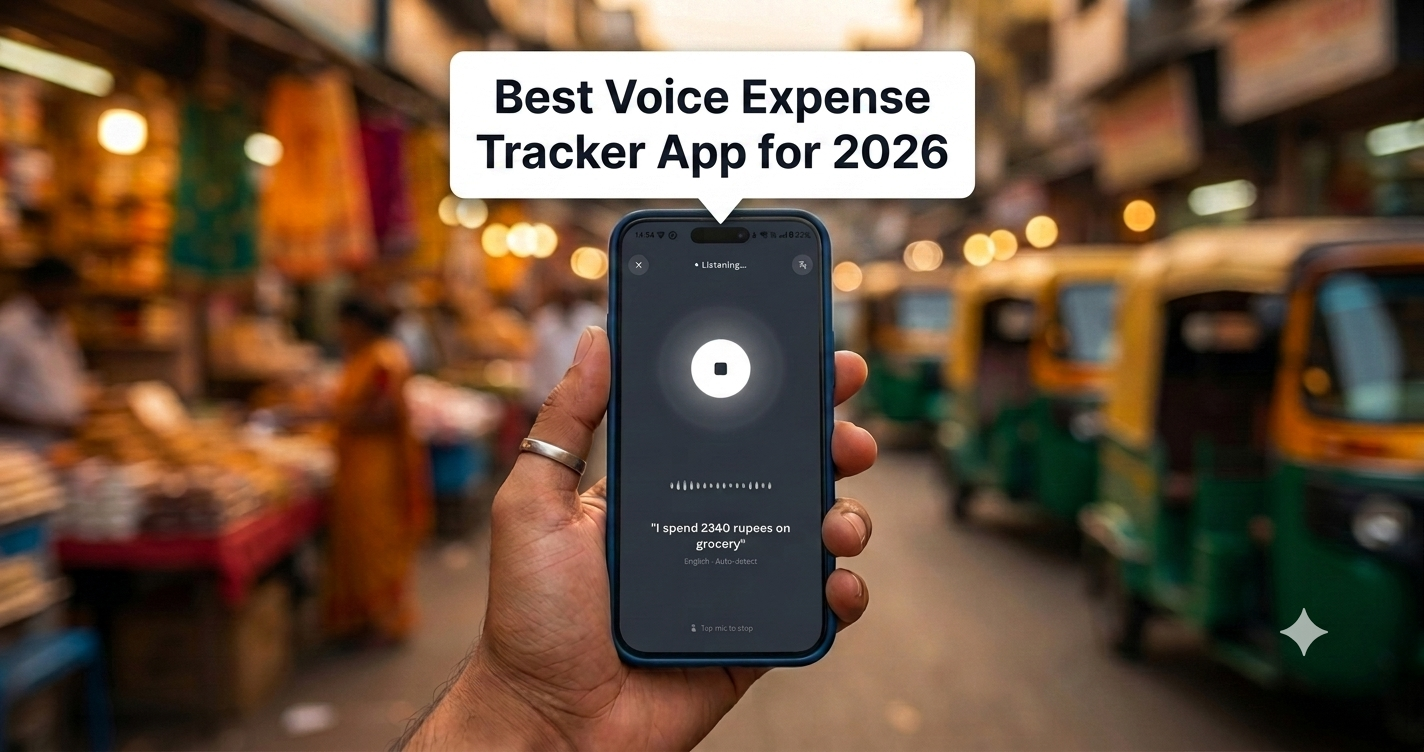
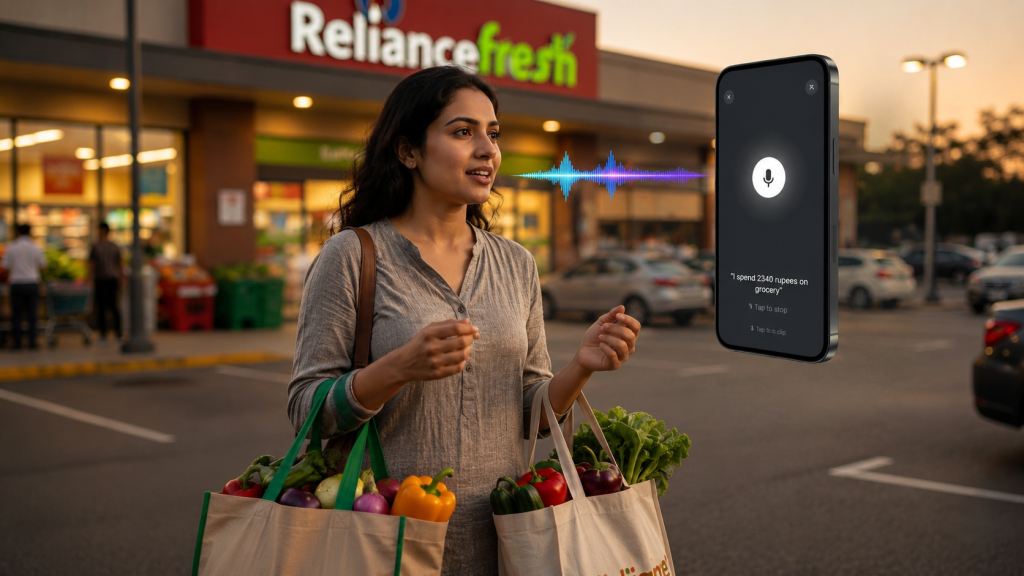
    You’re at the grocery store. Bags in both hands. You just spent ₹2,340. You get to your car and think: “I should log this.”

    But then you realize: your hands are full. Your phone is buried in your pocket. Opening the banking app, finding the expense tracker, typing out the amount, selecting the category—it all takes time.

    By the time you make it home, you’ve forgotten to log it.

    This friction happens thousands of times a day for millions of people worldwide. The average person forgets to log 40% of their daily expenses because manual entry is too cumbersome.

    That’s the problem with traditional expense tracking apps. They were designed for people sitting at desks, not for the real world.

    But what if you could track expenses without typing at all?

    What if you could log a ₹500 dinner at a restaurant, a ₹150 coffee, and a ₹1,200 Uber ride all while keeping both hands free? What if your app understood context, automatically categorized expenses, and even understood both Hindi and English without forced translation?

    That’s the power of voice-based expense tracking—and it’s changing how millions of people manage their money in 2026.

    Why Manual Expense Tracking Is Failing (Even Though Everyone Knows They Should)

    The Statistics Tell the Story

    68% of people attempt to track their expenses manually at some point. Yet:

    • 52% abandon tracking within the first month
    • 71% admit forgetting to log purchases on the same day
    • 83% lose motivation after a few weeks of manual data entry

    The reason? Friction. Friction everywhere.

    The Hidden Costs of Traditional Expense Apps

    When you use a traditional expense tracking app, here’s what really happens:

    Moment 1: Purchase Made. You buy something. You’re busy. Your hands might be full. Your mind is elsewhere.

    Moment 2 – Memory Lag: Hours pass. You get home. You remember: “Oh, I need to log those expenses.”

    Moment 3 – App Opening: You open your phone. Unlock it. Find the app. Wait for it to load.

    Moment 4 – Manual Data Entry: You manually enter the amount, choose a category, optionally add a note, and then save the expense.

    Moment 5 – Repetition: You do this 5-10 times a day for dozens of purchases.

    The Result? By day 7, you’re exhausted. By day 30, you’ve quit.

    The bigger problem? You’re missing data. That coffee you forgot to log. The lunch you didn’t record. The subscription you didn’t remember. Your expense data is incomplete, so your budget is built on inaccurate information.

    Why Categories Are Confusing

    Even when people log expenses, they’re confused by categorization.

    Is a coffee from a convenience store “Food & Dining” or “Groceries”?

    Is an Uber to visit a friend “Travel” or “Entertainment”?

    Traditional apps force you to choose. You pause to decide the right category, wasting 5–10 seconds on every expense entry.

    Multiply that across 10-15 daily transactions, and you’re spending 2+ minutes daily just categorizing expenses.

    The Zero-Typing Solution: How Voice Expense Tracking Changes Everything

    Grocery tracking with voice

    Voice-based expense tracking eliminates all of this friction.

    Instead of pulling out your phone, unlocking it, opening an app, and typing—you simply speak.

    “Spent 500 rupees on groceries.”

    Done. Your app:

    • Logs the amount (₹500)
    • Records the category (Groceries)
    • Timestamps the transaction
    • Understands natural language (no rigid templates)
    • Works while you drive, walk, cook, or carry grocery bags

    With the Zero-Typing principle, your hands stay free, your focus remains uninterrupted, and the app takes care of the rest.

    Why This Matters for Your Life

    Let’s be specific. Here’s how zero-typing changes your day:

    Scenario 1: Commuting (5 minutes saved). Traditional app: You’re sitting in an Uber. You recall each expense, manually enter and categorize every transaction, double-check for missed entries, and spend nearly five minutes logging what should have taken seconds.

    VOXPENSE: You say: “Spent 450 on lunch, 150 on coffee, 300 on snacks.” You press send. Done in 30 seconds. Time saved: 4.5 minutes.

    Scenario 2: Grocery Shopping (3 minutes saved). Traditional app: You’re at the store, bags in both hands. Instead of logging each expense one by one from memory, manually categorizing them, and spending five minutes checking for missed entries, you can record everything in seconds. Total time: 3+ minutes.

    VOXPENSE: You’re in the car (hands free). You say: “Spent 2,340 on groceries.” Done in 10 seconds.

    Scenario 3: Multiple Small Transactions (10+ minutes saved). Traditional app: You buy: coffee (₹120), sandwich (₹280), book (₹450), parking (₹40). You remember some, forget others. You manually type and categorize. Total time: 8-10 minutes. Data quality: 70% complete.

    VOXPENSE: You say all 4 purchases as they happen. The app logs them instantly. You don’t forget because you log in real-time. Total time: 1 minute. Data quality: 100% complete.

    Add this up over a month: You save 5-8 hours per month from elimination of manual data entry friction.

    How Voice Expense Tracking Actually Works

    You might wonder: How does a voice app understand what you’re saying?

    Here’s the technical reality in simple terms:

    Step 1: Speech Recognition (AI Listens)

    You speak your expense: “Spent 1,200 on Uber to airport.”

    Advanced AI listens to your voice and converts it to text. Modern voice recognition—powered by artificial intelligence—understands:

    • Numbers (1,200)
    • Context (Uber = travel)
    • Natural language (You didn’t say “expense category: transportation”—you just said “Uber”)
    • Multiple languages (Hindi, English, mixing both naturally)

    Step 2: Intelligent Parsing (AI Understands)

    The app breaks down what you said:

    • Amount: 1,200
    • Category: Travel (from the word “Uber”)
    • Merchant: Uber
    • Time: Now (automatically timestamped)

    You didn’t need to specify any of this. The app understood it from context.

    Step 3: Automatic Categorization (AI Learns)

    The app doesn’t just recognize words. It learns patterns:

    • Spent 200 on dinner → Food & Dining
    • Spent 300 on Netflix → Entertainment (not a surprise; it remembers Netflix is a subscription service)
    • Spent 1,500 on Amazon → Shopping (and remembers your previous Amazon purchases)
    • Spent 80 on parking → Transport

    Over time, the app learns your spending patterns and gets smarter about categorization.

    Step 4: Data Synchronization (Instant Updates)

    Your expense data syncs instantly across:

    • Your phone’s dashboard
    • Your web account
    • Your financial summary
    • Your budget tracking

    You see updated spending data in real-time, without any manual work.

    Key Features That Make Voice Tracking Essential

    1. Real-Time Expense Logging

    Why it matters: Most people forget purchases within hours. Voice tracking captures expenses at the moment they happen.

    You’re standing at the coffee shop. You buy a coffee. You say “Spent 150 on coffee.” Logged immediately. No memory lag. No forgotten data.

    2. Hands-Free Operation

    Why it matters: 73% of people are multitasking when they should be logging expenses. They’re:

    • Driving
    • Cooking
    • Carrying groceries
    • Pushing a stroller
    • Walking

    Voice tracking doesn’t require typing, screen interaction, or visual attention. You speak while doing anything else.

    3. Natural Language Understanding

    Why it matters: You don’t think in app categories. You think naturally:

    • Spent 500 on gas
    • Paid my Netflix subscription
    • Treated myself to lunch
    • Bought gifts for mom

    Traditional apps force rigid input. Voice apps understand what you actually mean.

    4. Bilingual Support (Hindi & English)

    Why it matters: 40% of smartphone users in India primarily use Hindi. Forcing them to think in English while logging expenses adds friction.

    Voxpense understands:

    • Pure Hindi: ₹500 किराए पर खर्च किया
    • Pure English: Spent $500 on rent
    • Mixed code-switching: Spent 500 on chai (mixing English amount with Hindi product)

    5. Automatic Categorization with AI

    Why it matters: The app learns YOUR categorization preferences over time.

    Most people categorize “Starbucks” as “Food & Dining.” But some people categorize it as “Coffee” or “Cafes.” The AI learns your pattern and starts auto-categorizing correctly based on your behavior.

    6. Context-Aware Spending Insights

    Why it matters: The app doesn’t just store data—it analyzes patterns.

    After 2-3 weeks, your app might tell you:

    • You spent 45% more on food this week than last week
    • Your commute expenses are 30% higher due to increased travel
    • You’ve spent ₹8,500 on entertainment this month vs ₹6,200 last month

    These insights help you adjust behavior in real-time, not at month-end.

    The Real-World Problem Voice Solves

    Let’s get specific about who struggles most with traditional expense tracking:

    Busy Professionals

    You’re managing a business. You attend meetings, lunches, client dinners. You take Ubers, taxis, flights. By evening, you have 20+ expense entries to log.

    Traditional app: You dread it. You put it off. By week’s end, you’ve forgotten half of them.

    Voice app: You log as you go. Spent 450 on client lunch. Spent 1,200 on Uber. Done. Real-time accuracy.

    Parents Managing Family Spending

    You’re buying groceries, school supplies, kids’ activities, paying bills. Your expenses are scattered across dozens of merchants and days.

    Traditional app: You sit down once a week to “catch up” on logging. You’re exhausted. You forget details. Your data is incomplete.

    Voice app: You log while shopping. “Spent 3,500 on groceries.” “Spent 800 on school books.” You have 100% data capture without adding stress.

    Freelancers & Gig Workers

    You’re getting paid variably. You have business expenses (equipment, software, co-working space) mixed with personal expenses.

    Traditional app: You lose track. You overspend on business items. You miss tax deductions because you didn’t properly track and categorize.

    Voice app: You log business expenses as tax-deductible in real-time. Your app builds your expense records automatically, perfect for tax season.

    Students Managing Limited Budgets

    You have a small allowance or part-time income. Every rupee matters. You need to see where your money goes.

    Traditional app: You forget to log. Your data is missing. You think you spent ₹5,000 on food but actually spent ₹7,000 (forgot to log). Your budget is worthless.

    Voice app: You log everything. Your data is complete. You actually know where your money goes.

    Voxpense vs. Traditional Expense Tracker Apps

    Here’s how voice-based tracking compares to keyboard-based apps:

    FeatureTraditional AppVoice App (Voxpense)
    Data Entry MethodType amounts, select categoriesSpeak naturally
    Time per expense45-60 seconds5-10 seconds
    Hands requiredBoth (typing, scrolling)None (hands-free)
    Real-time accuracy50-60% (people forget)95%+ (log immediately)
    Language supportEnglish mostlyHindi + English + code-switching
    Category selectionManual (choose from list)Automatic (AI learns)
    Mobile dependencyHigh (must use app)Low (just need voice)
    Learning curveMedium (menus, categories)Low (just speak naturally)
    Retention rate25-35% (people quit)75%+ (minimal friction)
    Cost$5-15/month₹99/month or free tier

    The key difference? Traditional apps require decision-making and manual effort at the moment of logging. Voice apps eliminate that friction.

    How to Use Voxpense: The Zero-Typing Workflow

    Step-by-step, here’s how simple voice expense tracking works:

    Step 1: Open the App (2 seconds)

    Tap Voxpense on your home screen. The recording interface appears.

    Step 2: Speak Your Expense (10-15 seconds)

    Say what you spent, naturally:

    • Spent 500 on coffee
    • Paid 2,300 for groceries
    • Treated myself, spent 1,200 on shoes
    • Train ticket to Delhi, 450 rupees

    Step 3: AI Processes (Instant)

    The app:

    • Recognizes your speech
    • Extracts amount and category
    • Stores timestamp
    • Categorizes automatically
    • Updates your dashboard

    Step 4: View Your Data (Real-Time)

    Open your dashboard & see:

    • Today’s spending by category
    • Weekly trends
    • Monthly comparison vs budget
    • Spending insights and alerts

    Total time from purchase to logged entry: 20 seconds (including speaking).

    The Psychology of Expense Tracking

    Here’s why voice changes behavior:

    Traditional apps create friction at the wrong moment. You buy something. You’re busy. You’re in the moment. The app asks you to stop, pull out your phone, think, and type. Your brain says: “I’ll do this later.” You never do.

    Voice apps align with behavior. You buy something. You immediately speak about it (takes 10 seconds). Your brain feels satisfied—you’ve recorded it. The moment hasn’t been disrupted. And your data is complete.

    This is why voice tracking has such higher adoption and retention rates.

    Real-World Use Cases

    Case 1: Priya, a Marketing Manager

    The Problem: Priya manages her household budget, but constant business expenses blur personal and professional spending. She uses traditional apps but forgets to log most Uber rides, client lunches, and coffee meetings.

    With Voxpense: Priya now logs expenses the moment they happen. “Spent 1,200 on Uber to client office.” “Client lunch, 1,500 rupees.” By month-end, she has complete data. She can:

    • Claim legitimate business expense deductions
    • See her actual personal spending (not inflated by forgotten business expenses)
    • Make accurate budget adjustments

    Result: 40% more accurate budgeting. 2+ hours monthly saved. Clear business vs personal expense separation.

    Case 2: Rohan, a Student

    The Problem: Rohan gets ₹10,000/month allowance. He thought he was spending ₹6,000, but couldn’t figure out where the money went. A traditional app felt like homework.

    With Voxpense: Rohan speaks his expenses as they happen. In Week 1, he logs: “1,200 on food,” “800 on Netflix,” “500 on books,” “2,000 on outings.” He’s shocked. He actually spent ₹9,800, not ₹6,000.

    Armed with real data, he adjusted his behavior. He now uses Voxpense to stay within his ₹9,500 monthly budget.

    Result: Complete expense visibility. Behavioral change. Financial discipline without stress.

    Case 3: Meera, a Freelancer

    The Problem: Meera earns through freelancing but doesn’t have a clear picture of business vs personal expenses. She overspends on software, misses tax deductions, and gets stressed during tax season.

    With Voxpense: Meera tags business expenses as “Tax Deductible” while logging. The app automatically separates personal from business spending. By tax season, she has a complete, categorized record of all business expenses.

    Result: Successful tax filing with documented deductions. ₹15,000+ in claimed deductions. Zero stress during tax season.

    The Bottom Line: Why Voice Is the Future of Budgeting

    Traditional expense tracking apps have failed because they add friction, not solve problems.

    Traditional expense apps ask you to remember, pause, type, think, and manually categorize every transaction.

    Voice expense tracking removes all that friction.

    It lets you:

    • Log expenses in seconds, not minutes
    • Keep your hands free while multitasking
    • Capture 100% of your spending (no forgotten purchases)
    • Get automatic insights without manual analysis
    • Stay on budget without the stress

    The future of personal finance isn’t about complicated spreadsheets or detailed apps. It’s about removing friction so completely that budgeting becomes as natural as speaking.

    And that’s exactly what voice expense tracking does.

    Ready to Track Expenses the Smart Way?

    Stop wasting time on manual expense logging, forgetting purchases, and building budgets with incomplete financial data.

    Try Voxpense free. No credit card required. Start speaking your expenses today.

    Download Voxpense Free →

    With hands-free expense tracking, your data stays complete, and your budget stays on track.

    What’s the biggest pain point you face with expense tracking? Share in the comments below. We read every response and use your feedback to improve Voxpense.